

Views: 0 Author: Site Editor Publish Time: 2026-11-08 Origin: Site


Selecting the correct flute count for your milling operations is never a simple matter of thinking "more is better." Machinists constantly perform a delicate balancing act between maximizing chip evacuation and maintaining critical tool rigidity. When you choose the wrong flute configuration, you invite a cascade of severe machining problems. Incorrect flute counts inevitably lead to rapid chip packing, catastrophic tool breakage, and unacceptable surface finishes. Ultimately, these errors drive up your cycle times and skyrocket daily scrap rates. As the foundational cutting tools for high-performance CNC machining, Solid Carbide End Mills offer incredible metal removal potential. However, unlocking their superior substrate performance relies entirely on matching the specific geometry to your exact application. This comprehensive guide provides a concrete, decision-stage framework to help you navigate this tooling process. You will learn exactly how to choose between 2-flute and 4-flute configurations based on workpiece material, specific operations, and your machine's unique capabilities.
Flute count dictates chip space vs. core strength: Fewer flutes provide larger chip valleys for soft materials; more flutes provide a thicker, stiffer core for hard materials.
2-Flute is the standard for non-ferrous materials: Ideal for aluminum and plastics where rapid chip evacuation is critical to prevent material welding.
4-Flute excels in ferrous metals and finishing: The go-to for steel and hard alloys, offering higher feed rates, reduced deflection, and superior surface finishes.
Machine rigidity matters: High flute counts require rigid industrial setups; low-horsepower or hobbyist machines may struggle with the increased cutting forces of a 4-flute tool.
Every end mill design involves a strict physical compromise. As you increase the flute count on a cutting tool, you must inherently increase its core diameter. The core represents the solid central mass of the tool. While a larger core adds tremendous strength, it steals valuable space from the chip valleys. Machinists call these valleys "gullets." You cannot possess maximum tool rigidity and maximum chip clearance simultaneously. You must prioritize one physical trait over the other based on your immediate machining goals.
Rapid chip evacuation remains vital for tool survival. Machining metal generates extreme friction. The resulting metal chips absorb the vast majority of this heat. You must evacuate these hot chips from the cutting zone instantly. If chips remain trapped in the gullet, the tool will cut them again. We call this destructive process "recutting." Recutting destroys sharp cutting edges rapidly. It forces heat back into the workpiece and causes premature tool failure.
Tool deflection directly impacts your part accuracy. When you feed a tool into solid metal, cutting forces push back against it. These forces bend the end mill. A 4-flute tool features a much thicker core than a 2-flute tool. It resists this bending force exceptionally well. Less deflection means you achieve straighter walls and hold tighter dimensional tolerances. A 2-flute tool flexes easier. It requires careful feed rate management to maintain precision in rigid materials.
Best Practice: Always calculate your specific chip load per tooth (IPT). If you switch from a 2-flute to a 4-flute tool while maintaining the same feed rate and spindle speed, your chip load drops by half. You must adjust your programming accordingly.
Common Mistake: Machinists often ignore tool stick-out. Even a highly rigid 4-flute tool will deflect severely if you leave too much shank exposed outside the collet. Always choke up on the tool as much as your operation allows.
The primary advantage of a 2-flute geometry is maximum chip clearance. The deep, expansive gullets hold massive volumes of sheared material. You absolutely need this open space for materials producing long, stringy chips. Without it, the chips compress and pack into the flutes instantly. This packing ruins the surface finish and often snaps the tool.
These tools dominate specific material categories. You should deploy them primarily for non-ferrous and soft materials. Target materials include aluminum, brass, copper, plastics, and wood. These substrates melt easily under continuous friction. Aluminum proves especially problematic. It possesses a low melting point. If chips linger in the cutting zone, they weld directly to the carbide edge. A 2-flute design ejects them before welding can occur.
Certain toolpaths heavily favor lower flute counts. Below are the optimal operations for 2-flute configurations:
Heavy Slotting: Cutting a closed channel engages the tool aggressively. You need massive evacuation capacity to clear chips from confined spaces.
Deep Pocketing: Excavating material from deep cavities demands large gullet volume to lift chips vertically out of the hole.
Plunge Cutting: Most 2-flute geometries feature center-cutting capabilities. You can program them to feed straight down on the Z-axis like a drill.
Despite their excellent clearance, these tools carry distinct limitations. You must utilize slower feed rates compared to multi-flute alternatives. Because they only possess two cutting edges, pushing them too fast spikes the chip load per tooth to dangerous levels. Furthermore, their smaller core diameter creates a severe vulnerability. They will deflect noticeably if you force them into hardened steels or abrasive alloys.
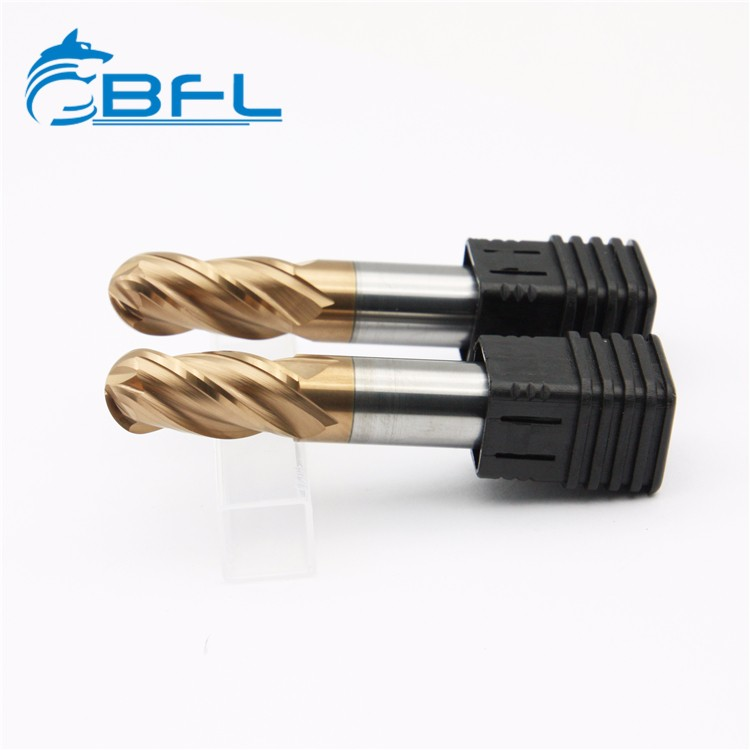
A 4-flute geometry offers exceptional rigidity and elevated metal removal rates in demanding materials. The thick core withstands immense lateral pressure. More cutting edges mean the tool takes a smaller bite per revolution at a given feed rate. This reduced chip load leaves a significantly smoother surface finish on your final part. You can also push the tool faster. Four flutes allow you to double your feed rate compared to a 2-flute tool while maintaining the exact same chip load.
You should reserve these tools for stronger, tougher materials. They excel at shearing heavy metals cleanly. Your primary target materials include:
Carbon steels and tough alloy steels
Stainless steels (304, 316, etc.)
Titanium and demanding aerospace alloys
Cast iron and ductile iron
High-temperature superalloys like Inconel
Optimal operations leverage the tool's inherent stiffness. They perform brilliantly during peripheral milling and exterior profiling. When you need to take finishing passes requiring extremely tight tolerances, a 4-flute tool remains your best option. The minimal deflection ensures your finished part measures exactly as programmed.
You face a high risk of chip packing if you misapply these tools. Do not use them for heavy slotting in soft, gummy materials like aluminum. The restricted gullets will clog almost immediately. Once the flutes pack with melted aluminum, the cutting forces spike. The tool will break violently inside the spindle. If you must use them on softer materials, restrict them strictly to light finishing passes.
Choosing the right flute count requires evaluating three distinct criteria. By systematically reviewing these factors, you eliminate guesswork from your tooling selection process.
Your workpiece material dictates your primary boundary conditions. Machinists follow a reliable rule of thumb for baseline selection. If the material feels soft, gummy, or melts easily, default to a 2-flute end mill. If the material feels hard, abrasive, or shears cleanly without melting, default to a 4-flute end mill. Let the material's chip-forming characteristics guide your initial choice.
The specific machining operation heavily influences chip evacuation needs. Are you cutting a deep slot or profiling an outside edge? Slotting surrounds the tool with solid material on both sides. It demands aggressive evacuation. Profiling only engages the side of the tool. It demands high rigidity to resist pushing away from the workpiece. Match the tool's core strength to the physical demands of your toolpath.
Your machine's physical architecture matters immensely. Industrial CNC machines utilize massive cast-iron frames. They easily absorb the intense cutting forces generated by 4-flute tools. They can fully utilize aggressive feed rates without inducing chatter. Conversely, light-duty or hobbyist desktop machines lack this structural mass. They flex under heavy cutting loads. These machines often lack the spindle horsepower required to push four cutting edges simultaneously. Operators running light-duty setups often benefit from 2-flute configurations. Fewer flutes significantly reduce the overall cutting pressure on the machine frame.
Toolpath and Material Evaluation Matrix
Material Type | Machining Operation | Recommended Flute Count | Primary Reason |
|---|---|---|---|
Aluminum / Plastics | Heavy Slotting | 2-Flute | Maximum chip evacuation prevents material welding. |
Aluminum / Plastics | Light Finishing | 2-Flute or 3-Flute | Balances clearance while improving surface finish. |
Carbon / Stainless Steel | Peripheral Profiling | 4-Flute | Thick core resists deflection; allows high feed rates. |
Titanium / Hard Alloys | Precision Finishing | 4-Flute | Reduced chip load per tooth yields superior finish. |
Identifying the correct flute count represents only half the battle. Tool consistency ultimately determines your machining success. Switching tool brands constantly based on minor price differences creates production chaos. Cheap tools exhibit unpredictable tool life. They force you to constantly adjust speeds and feeds. They lead to inconsistent cycle times and unexpected downtime. You need a reliable, engineering-focused supplier.
When evaluating potential vendors, you must scrutinize three critical manufacturing dimensions. First, examine their substrate quality. You should actively look for tools ground from micro-grain or nano-grain carbide blanks. These advanced structures pack smaller tungsten carbide particles closer together. They provide significantly higher transverse rupture strength and superior edge retention.
Second, verify their edge preparation and geometry. A quality tool features proper primary and secondary relief angles. The edge hone must strictly match the intended flute count and target material. An edge hone designed for tough steel will tear soft aluminum, regardless of the flute count.
Finally, investigate their coating technologies. Bare carbide rarely performs optimally in modern production environments. You must ensure the solid carbide end mill manufacturer offers specialized, application-specific coatings. For example, look for Zirconium Nitride (ZrN) or Titanium Carbonitride (TiCN) on 2-flute tools intended for aluminum. These coatings resist aluminum adhesion perfectly. For 4-flute tools cutting abrasive steels, seek Titanium Aluminum Nitride (TiAlN). It thrives under extreme heat and protects the carbide substrate brilliantly.
Your shortlisting logic should prioritize transparency. Partner with manufacturers who willingly provide comprehensive speeds and feeds data. Avoid brands making wild, unsubstantiated claims about "universal tools" that supposedly cut every material perfectly. Engineering always involves compromise. Trust suppliers who openly acknowledge these physical realities.
The debate between 2-flute and 4-flute geometries is not a matter of absolute superiority. The decision is definitively solved by correctly identifying your workpiece material and analyzing your specific milling operation. Failing to respect the physics of chip evacuation and core rigidity will inevitably ruin your tools and parts.
As a final recommendation, establish clear defaults in your shop. Default to 2-flute geometries when cutting soft aluminum, plastics, and performing heavy slotting operations. Default to 4-flute geometries when cutting tough steels, titanium, and executing precision finishing passes. This simple rule eliminates most common programming errors.
Your next step requires immediate action on the shop floor. Audit your current tool crib today. Ensure your stocked flute geometries actually match your highest-volume production materials. If you spot mismatches, request testing samples from a verified, transparent manufacturer and update your standard operating procedures.
A: It is generally not recommended for slotting due to chip welding and packing. However, it can be used for light finishing passes or peripheral milling on aluminum if the chip load is managed and coolant clears the chips effectively.
A: A 3-flute end mill serves as a compromise, offering more chip clearance than a 4-flute but greater rigidity and higher feed rates than a 2-flute. It is increasingly popular as the definitive choice for high-performance aluminum machining.
A: Yes. More flutes mean more cutting edges engaged with the material simultaneously, requiring more horsepower and structural rigidity to maintain the cut without inducing chatter. Low-power machines often perform better with lower flute counts.
A: Almost all 2-flute end mills are center-cutting (capable of plunging straight down). Most modern 4-flute end mills are also center-cutting, but two of the flutes typically stop short of the center. Always verify with the manufacturer's spec sheet before programming a plunge cut.


