

Views: 0 Author: Site Editor Publish Time: 2026-11-15 Origin: Site


Machining steel creates a harsh environment filled with extreme heat and abrasive wear. Bare carbide simply cannot survive these violent conditions for long, making rapid degradation a constant threat on the shop floor. Uncoated tools fail quickly under such intense mechanical stress. You need a transparent, evidence-based framework to evaluate and select the correct physical vapor deposition (PVD) coatings for your specific steel applications. Getting this choice right prevents ruined parts and costly spindle downtime. This guide skips the marketing fluff to deliver actionable insights. We focus heavily on thermal dynamics, material hardness compatibility, and realistic returns on your tooling investment. Choosing a coating involves more than reading a catalog description. You must analyze the exact metallurgy of your workpiece. You will learn exactly how to match coating chemistry to your shop's machining environment for maximum performance. This systematic approach transforms tool selection from guesswork into a predictable engineering decision.
Coating selection should be dictated by the specific steel alloy's hardness (HRC) and the intended cutting speeds, not just general durability claims.
AlTiN (Aluminum Titanium Nitride) remains the industry standard for high-heat, dry machining of hard steels due to its self-forming protective oxide layer.
Applying coolant incorrectly with certain high-performance coatings can cause thermal shock, actively degrading tool life rather than extending it.
Variances in edge preparation and PVD application quality mean that vetting your supplier is as critical as selecting the coating chemical composition.
Tool failure in steel machining goes far beyond the simple price of replacing a dull cutter. It triggers a cascade of expensive problems across your shop floor. Unexpected breakage causes valuable spindle downtime. It often leads to scrapped high-value parts and destroys unpredictable process reliability. You cannot scale production effectively when tools fail randomly during critical operations. Operators waste hours adjusting offsets and replacing broken bits instead of producing parts. When tools break prematurely, machinists spend hours extracting broken carbide from valuable workpieces. This rework destroys profit margins.
Furthermore, a degrading cutting edge negatively affects the workpiece surface finish. Poor surface finishes require secondary grinding or polishing operations. This adds unnecessary labor hours to the final product. Selecting the right coating maintains edge sharpness longer, ensuring consistent surface finishes from the first part to the last.
An optimal coating choice fundamentally stabilizes your cutting process. It allows machinists to push tools harder and safely maximize Material Removal Rates (MRR). Stable processes also yield highly predictable tool change intervals. You can confidently swap cutters during scheduled pauses rather than mid-cycle emergencies. This predictability is the backbone of efficient lights-out manufacturing and unattended machining runs.
High-performance coatings certainly carry a premium upfront cost compared to basic alternatives. However, their true value emerges when applied correctly in an optimized environment. The return on investment strictly depends on operating the tool at elevated speeds and feeds. The coating chemistry is engineered specifically to handle these intense parameters. Running a premium-coated tool at slow, conservative speeds completely wastes its potential. You must balance the initial expense against the significant reduction in cost-per-part achieved through aggressive, reliable machining over long production runs.
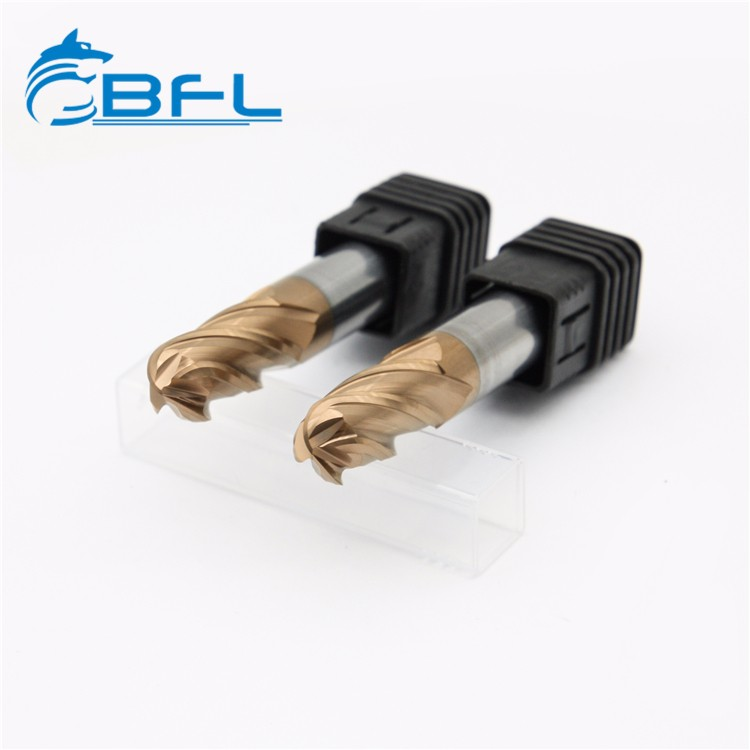
Selecting the right PVD chemistry requires understanding how different layers react under intense cutting friction. Manufacturers design various coatings to tackle specific thermal and abrasive challenges encountered during metal removal. Incorporating premium Solid Carbide End Mills into your workflow demands matching the coating to the exact material behavior. A mismatch leads to rapid edge degradation and poor surface finishes. At the microscopic level, cutting steel involves shearing metal at high velocities. This shearing action creates a tremendous amount of friction. The friction generates temperatures that can easily exceed 800 degrees Celsius at the cutting zone. PVD coatings act as a thermal barrier between the hot chip and the sensitive carbide substrate.
Here are the primary solution categories you will encounter in the industrial marketplace:
AlTiN (Aluminum Titanium Nitride): This structure features a much higher aluminum content compared to older formulas. It dynamically forms a tough protective aluminum oxide layer when exposed to high heat. We recommend it highly for hardened steels, dry machining environments, and aggressive high-speed applications. The hotter it gets, the better it protects the underlying carbide substrate from thermal shock.
TiAlN (Titanium Aluminum Nitride): Think of this as a highly balanced, highly versatile alternative to AlTiN. It delivers excellent overall oxidation resistance across a broad spectrum of cutting speeds. It works exceptionally well in general-purpose steel milling, confidently handling moderate to high temperatures. It serves as a great default option when processing mixed batches of medium-alloy materials.
TiCN (Titanium Carbonitride): This option provides significantly lower friction alongside exceptional surface hardness. It suits softer, gummy materials like mild low-carbon steel perfectly. In these applications, operating temperatures remain relatively low, preventing thermal degradation. It excels at preventing chips from welding to the cutting edge, a common problem when milling soft carbon steels.
You must also know what to avoid to prevent catastrophic failures. Coatings like ZrN or TiB2 are heavily optimized for non-ferrous materials, particularly aluminum and brass. They provide negligible benefits for steel applications. In fact, they act as an active detriment when milling ferrous metals. Their specific chemical reactivity at high temperatures causes immediate tool failure. The coating essentially dissolves into the steel chips, leaving the bare tool exposed to instant destruction.
Your specific shop floor environment heavily dictates ultimate coating efficacy. A premium tool cannot out-perform poor implementation realities. You must perfectly align your coolant strategy with the chemical properties of your chosen tool layer. Many shops make the critical mistake of applying standard coolant practices to advanced PVD technologies.
Dry machining combined with a strong, continuous air blast represents the ideal setup for AlTiN and TiAlN. The deliberate lack of liquid coolant allows the cutting zone to heat up quickly. It must reach the high temperatures necessary to activate the coating's protective oxide layer. Simultaneously, the targeted air blast aggressively removes chips to prevent dangerous recutting. Recutting hardened steel chips destroys cutting edges faster than almost any other factor. Setting up a dry machining process requires precise air blast positioning. You cannot simply blow air vaguely at the spindle. The air nozzle must aggressively target the exact point of cut. It needs enough velocity to blast red-hot chips away from the tool path before the end mill rotates back around for the next strike.
Conversely, wet machining presents major risks for certain advanced chemistries. Using continuous flood coolant with AlTiN on steel often induces severe thermal shock. The rapid, violent heating and cooling cycle continuously stresses the tool surface during rotation. The edge heats up in the cut and cools rapidly as it exits. This cycle causes severe micro-cracking and leads directly to premature flaking of the protective layer. Engineers call this phenomenon thermal crazing. It happens because the outside of the tool cools instantly while the core remains hot, causing the carbide to flex and crack the rigid PVD layer.
Evaluate your strict shop protocols before purchasing expensive tools. If a job strictly dictates flood coolant to maintain part dimension stability, you must adapt your tooling strategy. Select a coating with a much lower thermal activation threshold, like TiCN. Alternatively, deliberately adjust your surface footage and spindle speeds to minimize extreme temperature fluctuations during the cutting cycle.
Steel is not a monolithic material. Its hardness varies wildly depending on the specific alloy and its heat treatment state. This hardness directly influences how a cutting tool degrades over time. We can clearly categorize evaluation dimensions by looking at features-to-outcomes across different hardness ranges. Understanding this matrix is crucial for process engineers.
Steel Hardness Range (HRC) | Material Characteristics | Optimal Coating Choice | Expected Machining Outcome |
|---|---|---|---|
Low-Carbon / Mild Steels (Up to 30 HRC) | Highly susceptible to built-up edge (BUE). Tends to be gummy. | TiCN or Standard TiAlN | Provides low friction to evacuate chips quickly. Resists material adhesion. |
Medium-Alloy Steels (30–45 HRC) | Heat generation increases significantly during cuts. Moderate abrasion. | TiAlN | Serves as the baseline requirement to prevent premature edge wear and oxidation. |
Tool Steels & Hardened Alloys (45+ HRC) | Extreme abrasion and intense localized heat generation. | AlTiN (High-Aluminum) | Strictly required to maintain edge integrity, resist crater wear, and form an oxide shield. |
Use this matrix to guide your initial tooling selection process. Mild steels up to 30 HRC require high lubricity to fight built-up edge. TiCN delivers the low friction needed to clear gummy chips fast before they weld to the flute. For example, machining soft 1018 carbon steel falls into the low-hardness category. It machines easily but generates long, stringy chips that love to stick to cutting tools. TiCN is the perfect defense against this behavior.
Moving up to 4140 or 4340 medium-alloy steels, you encounter significant heat generation. These materials are tougher and demand more shear force. Standard TiAlN steps up to the challenge here, offering a balanced defense against both heat and moderate abrasion. This makes TiAlN the reliable baseline choice for maintaining edge sharpness over time.
Finally, when you mill D2 or H13 tool steels hardened to 50 HRC and above, standard coatings melt away. The friction is immense. High-aluminum AlTiN is strictly mandatory here. It fights off rapid crater wear by utilizing the extreme heat to build its own secondary oxide shield. Running AlTiN on soft 1018 steel at low speeds actually yields poor results, as it never gets hot enough to form its protective ceramic shield.
The chemical name printed on a tooling box never guarantees actual cutting performance. Implementation risks remain high if the underlying application process is fundamentally flawed. The PVD application process happens in a highly controlled vacuum chamber. However, not all chambers are equal. Variations in target purity, vacuum quality, and rotational speed inside the chamber drastically affect the final product. A cheap coating process yields a porous, weakly bonded layer. Poor PVD adhesion leads directly to sudden flaking during a cut. This failure exposes the bare carbide substrate immediately, ruining the tool in seconds.
You must apply strict shortlisting logic when evaluating any carbide end mill manufacturer. Consider the following crucial vetting steps to protect your tooling budget:
Inspect Edge Preparation: Always inquire about the manufacturer's pre-coating edge prep routines. Honed or specifically radiused cutting edges ensure the PVD layer adheres uniformly. It prevents microscopic chipping right at the critical cutting line. Understand that a razor-sharp edge is actually detrimental to coating adhesion. The sharpest microscopic point is too fragile and breaks off in the chamber. Premium manufacturers apply a deliberate hone to round the edge perfectly.
Verify Substrate Compatibility: Even the absolute best coating fails quickly if applied to the wrong grade of carbide. Ensure the supplier expertly matches the micro-grain carbide toughness to the coating's specific thermal properties. Substrate compatibility involves looking at the cobalt content in the carbide. Too much cobalt makes the tool tough but allows the coating to sink and flex. Too little cobalt makes the tool brittle.
Demand Batch Consistency: Ask potential suppliers about their internal quality control tolerances. They should measure coating thickness meticulously in microns using advanced optical equipment. Tight tolerances ensure predictable, repeatable performance across multiple tooling orders over several years. Reputable manufacturers use Calotest or X-ray fluorescence (XRF) equipment to verify their batch thickness.
Thorough vetting minimizes unexpected tool failures and keeps your production schedules running smoothly. Never treat end mills as pure commodities.
Navigating the complex world of tool coatings requires a disciplined, logical approach. You must first identify your specific steel hardness and decide between wet or dry cutting environments based on part requirements. Next, select the optimal chemical composition, like TiCN for mild steels or AlTiN for hardened alloys. Finally, always verify your supplier's manufacturing quality and edge preparation standards to ensure long-term reliability.
For modern, high-speed CNC environments cutting medium-to-hard steels, dry-machining combined with AlTiN-coated tooling offers the most reliable path to reducing your overall cost-per-part. This specific combination maximizes thermal resistance and safely speeds up material removal rates. It represents the pinnacle of current conventional milling strategies for tough ferrous alloys.
Before ordering your next batch of tooling, audit your current failure modes carefully. Inspect dull end mills under a microscope to identify whether they suffer from thermal cracking, abrasive wear, or built-up edge. Let the actual physical wear patterns guide your next coating decision. Adjusting your strategy based on evidence guarantees continuous improvement on the shop floor.
A: No. Steel requires coatings with high oxidation resistance like AlTiN. Aluminum requires low-friction, non-reactive coatings like ZrN or uncoated polished flutes. Using AlTiN on aluminum often leads to severe material adhesion and galling, quickly ruining the tool and the workpiece.
A: Flaking is typically caused by one of three issues. It happens due to extreme thermal shock from improper coolant application. It can also stem from poor edge preparation by the manufacturer prior to coating. Finally, running the tool at a feed rate that flexes the carbide beyond its elasticity limits will crack the coating.
A: Not necessarily. While a thicker coating offers more thermal protection, it also rounds the cutting edge slightly, which increases cutting pressure. High-performance tooling relies on precise, micron-level coating thickness. This carefully balances necessary edge sharpness with adequate thermal protection.


